
μενού
menu
The words of others

-
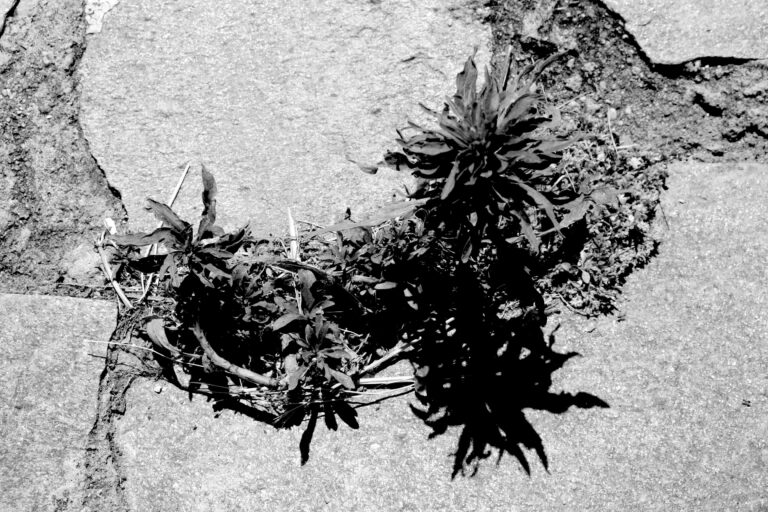
how can the crack speak?
A text from Bayo Akomolafe on white supremacy and the importance of cracks: “How do we unlearn white supremacy? We can’t. The pedagogical imperative that reduces learning to the isolated learner-that-learns, the self, conceives of white supremacy as what selves are doing, instead of how selves are being done. But white supremacy cannot be unlearned…
-

a liberation psychology
“A psychology of liberation is one whose primary focus is the communities we come from and create. Our collective history is as important as our individual history. A liberation psychology is more concerned with how structures of power shape and bind us than with the particular events of our individual childhoods. . . . a…
-

“I seem to be a verb”
I live on Earth at present, and I don’t know what I am. I know that I am not a category. I am not a thing – a noun. I seem to be a verb, an evolutionary process – an integral function of the universe. “I seem to be a verb” Buckminster Fuller, p.3
-

The meaning of holism
The word holistic is used in regard both to therapy and to CAM, although it is more clearly expressed in CAM. Leader (2009) sees therapy as working ‘with a person holistically’, while CAM practitioners frequently refer to treating the ‘patient as a whole’ (European Committee for Homeopathy et al., 2008, p. 15). Leader’s usage of…
-

narrative applications
Storytelling and therapy are first cousins. People in many places of the world do not tell stories just for fun, but in order to heal. The storyteller will choose a story carefully, so that it speaks to the heart of other humans. In the context of narrative psychotherapy, a client may derive meaning from recounting/…
-

The absence of wildlife from children’s lives
[…] Developmentalists are just beginning to consider the importance of wilderness and “wildness” in children’s lives. This theoretical and empirical neglect of the “wild” is surprising, for a number of reasons. First, a contextual, systemic approach to the study of children’s development (Fogel, et al., 2008; Melson, 2008) is now widely accepted. Since the publication…